SALONS
Extraterrestrial Governance
Seminar Salons
The Torchlight Summit is organized around a series of salon-style seminars designed for focused discussion rather than passive listening. Each salon is led by a seminar host and limited in size to encourage substantive exchange among participants.
Each salon unfolds in two parts.
Seminar 1
The first session introduces a foundational concept from political theory as it has been understood throughout human history on Earth. These discussions revisit the intellectual traditions that shaped institutions such as property, citizenship, sovereignty, and the rule of law.
Seminar 2
The second session examines how that same concept is challenged by the conditions created by space. Participants consider how environments without territory, traditional state structures, or stable populations may alter the assumptions that underlie familiar political frameworks.
Each salon leader will focus on one central concept, allowing the group to explore the idea in depth across both sessions.
Participants will receive pre-readings in advance of each seminar. These texts anchor the discussion and ensure that conversation can move quickly beyond definitions toward analysis and debate.
The goal of the salon format is to create a setting where scientists, technologists, and scholars can work through the implications of human expansion beyond Earth together. Rather than large lectures, these sessions prioritize sustained conversation around the political foundations of future spacefaring societies.
Salon Leadership
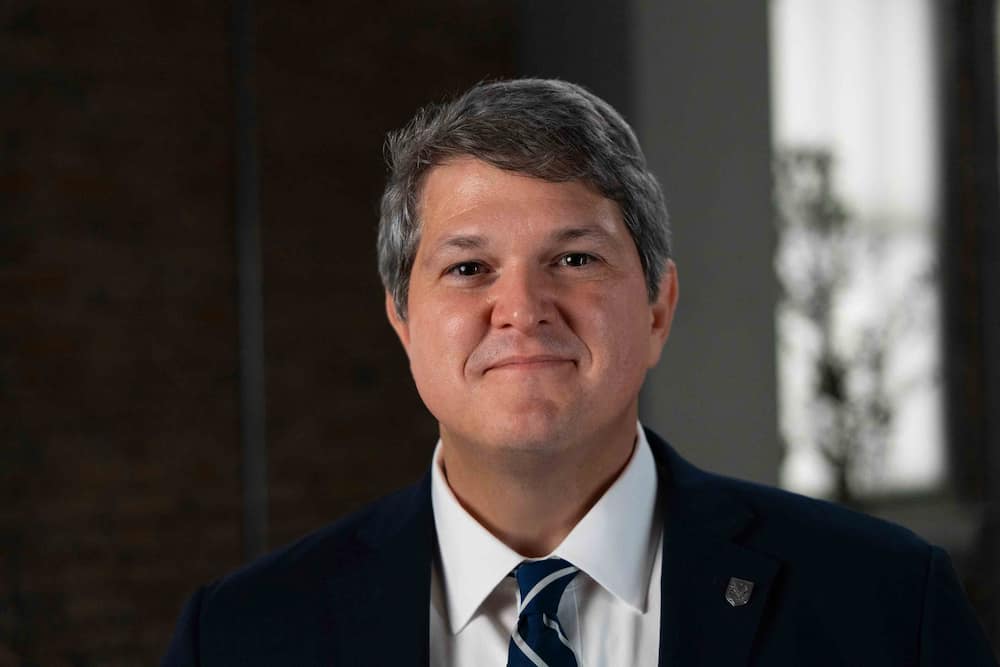
J. Michael Hoffpauir is Assistant Professor of Political Theory at the University of Austin (UATX). Previously, Hoffpauir taught in the School of Civic and Economic Thought and Leadership at Arizona State University, at Hillsdale College, and in the Lyceum Program in political and economic thought at Clemson University, where he also served as the program’s Associate Director. He has also taught in the Hudson Institute Political Studies program and in the James
Madison Memorial Fellowship.
Hoffpauir’s research interests include ancient and modern political thought, statesmanship, and the American founding. He is the author of Between Socrates and the Many: A Study of Plato’s Crito. Hoffpauir received a B.A. in Political Science from Louisiana State University, an M.A. in Political Science from Boston College, and a Ph.D. in Political Science from Claremont Graduate University.
Liberty and Property Rights: The United States vs The Outer Space Treaty
Seminar 1: The Liberal Foundations of the USA
This seminar will examine the natural rights teachings that underpin liberal, consent-based government and private property rights.
Seminar 2: The Outer Space Treaty and Liberty on Mars
This seminar will examine the Outer Space Treaty and arguments advanced by Scott Pace, Rand Simberg, and Robert Zubrin to clarify the challenges and opportunities for liberty on Mars.
Reading List:
John Locke, Second Treatise of Government
Jefferson et al., Declaration of Independence
United Nations, Outer Space Treaty of 1967
Rand Simberg, Selected Readings
Scott Pace, Space Development, Laws, and Values
Zubrin, The New World on Mars
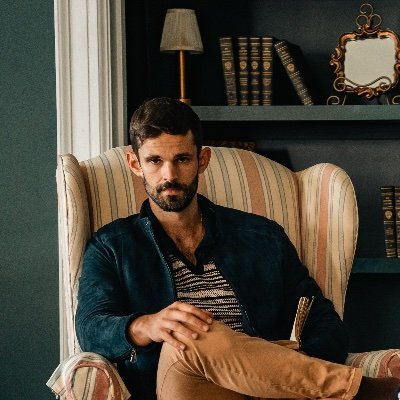
Spencer Klavan is a scholar, author, and podcaster who serves as a Visiting Professor at UATX, where he contributes to the university's Intellectual Foundations curriculum. He holds a PhD in Ancient Greek Literature from the University of Oxford and is a graduate of Yale University.
Klavan is the author of several influential works exploring the intersection of classical wisdom, science, and modern culture, including:
Light of the Mind, Light of the World: Illuminating Science Through Faith (2024)
How to Save the West: Ancient Wisdom for 5 Modern Crises (2023)
Music in Ancient Greece: Melody, Rhythm and Life (2021)
In addition to his books, he hosts the Young Heretics podcast and serves as an associate editor for the Claremont Review of Books.
Seminar 1: The Spaceship of State: Who Rules?
Space travel makes an ancient question real: what does justice look like in practice? We will address this question using examples from the classical city and the Mayflower.
Seminar 2: The New New World: What Will We Bring With Us?
When they set out for the Americas, our forefathers brought the best of the old world to a new one. Can we do it again?
Reading List:
Aristotle, Politics
Nathaniel Philbrick, Mayflower: Voyage, Community, War
William Bradford, Of Plymouth Plantation
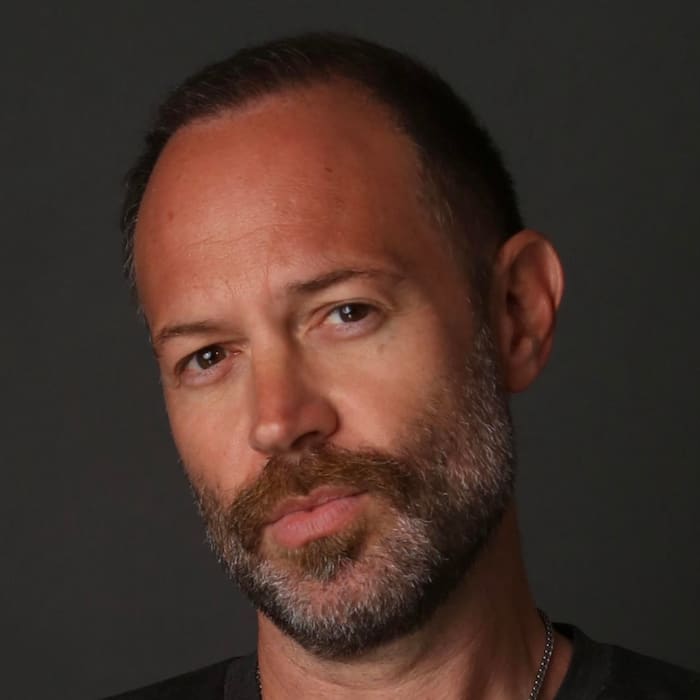
James Poulos is a theorist of tech and governance and a serial founder at the intersection of culture and media. A prolific writer and author of four books, most recently Human Forever and the forthcoming Golden Age Problems, he has created brands, products, shows, and publications across print, web, audio, and video, including The American Mind and the Digital Statecraft Summit for the Claremont Institute, Return for New Founding, and Frontier and Zero Hour for Blaze Media. James is a strategic advisor of Testament, a faithtech company focused on secure legacy architecture, and a nonresident senior fellow at the Foundation for American Innovation. He holds a PhD in Political Theory from Georgetown University.
Frontier Blowback: Ensuring new orders built abroad don't come home to roost to the detriment of the old regime
Seminar 1: Regime change at home: empire and the law of unintended synthesis
Ancient and modern analysts recognized that what happens at the political periphery doesn't stay there.
Seminar 2: Intoxication, transformation, recolonization: interworld risks and hedges
Through fact and fiction, modern and postmodern political theory offers sober counsel on regime preservation in expansionist times.
Reading List:
Tacitus, Agricola and Germania
Edmund Burke, Speech on Mr. Fox's East India Bill
Robert Heinlein, The Moon Is a Harsh Mistress (selections)
Jean Baudrillard, America (selections)