The Challenge: Health Intelligence for Space Colonization
Humanity is entering a new era of spaceflight.
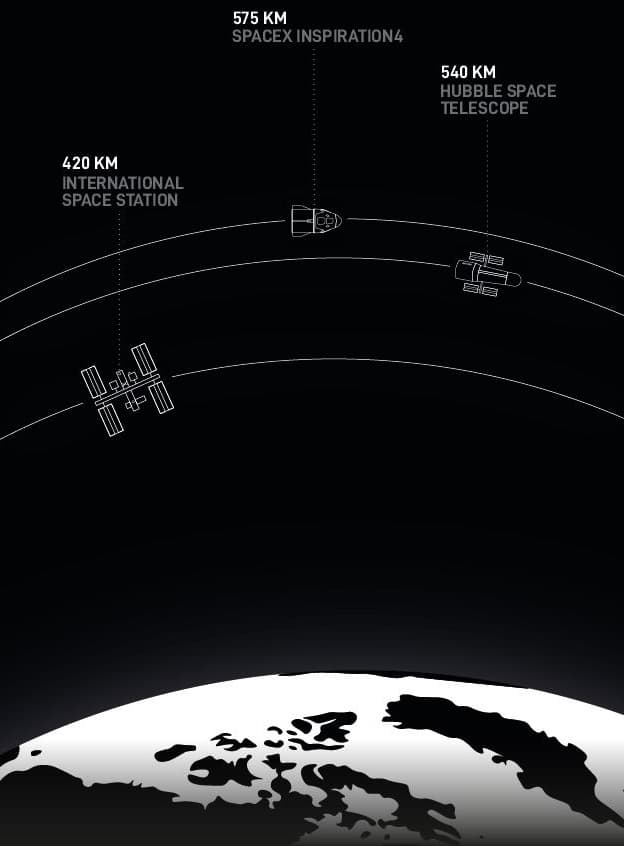
NASA’s Artemis program is preparing to return humans to the Moon. Private American companies are now capable of launching, landing, and deploying spacecraft at unprecedented cadence. Meanwhile, China is advancing its own lunar ambitions.
These developments are laying the groundwork for the next great step: Human settlement beyond Earth.
But the success of that future will depend on more than rockets, habitats, or launch systems.
It will depend on biology.
Every astronaut, explorer, and future space colonist carries the most critical infrastructure with them: the human body.
Understanding how that system responds to spaceflight will shape who can travel, how long they can remain, and how societies beyond Earth can endure.
Humanity is entering a new era of spaceflight.
NASA’s Artemis program is preparing to return humans to the Moon. Private American companies are now capable of launching, landing, and deploying spacecraft at unprecedented cadence. Meanwhile, China is advancing its own lunar ambitions.
These developments are laying the groundwork for the next great step: Human settlement beyond Earth.
But the success of that future will depend on more than rockets, habitats, or launch systems.
It will depend on biology.
Every astronaut, explorer, and future space colonist carries the most critical infrastructure with them: the human body.
Understanding how that system responds to spaceflight will shape who can travel, how long they can remain, and how societies beyond Earth can endure.
Imagine you are preparing to leave Earth.
Your destination could be the Moon, Mars, or deep space. The journey may last months, years, or even a lifetime.
Before committing to that mission, you would want answers to fundamental questions:
What does my biology say about my readiness for spaceflight?
What health risks might emerge during a mission?
Which biological signals should be monitored in orbit?
How does my risk profile compare to other explorers?
Short-duration missions in low Earth orbit offer a powerful way to answer these questions.
A mission lasting only a few days, paired with molecular biomonitoring, can reveal early signals of how the human body responds to spaceflight and provide data that informs long-term exploration decisions.
Imagine you are preparing to leave Earth.
Your destination could be the Moon, Mars, or deep space. The journey may last months, years, or even a lifetime.
Before committing to that mission, you would want answers to fundamental questions:
What does my biology say about my readiness for spaceflight?
What health risks might emerge during a mission?
Which biological signals should be monitored in orbit?
How does my risk profile compare to other explorers?
Short-duration missions in low Earth orbit offer a powerful way to answer these questions.
A mission lasting only a few days, paired with molecular biomonitoring, can reveal early signals of how the human body responds to spaceflight and provide data that informs long-term exploration decisions.
Molecular Biomonitoring
Molecular biomonitoring refers to the systematic measurement and analysis of molecular signals in the human body to assess physiological state, health risks, and biological responses to environmental exposures or stressors.
Molecular biomonitoring encompasses the collection and integration of all biological data that characterize how the human body responds to spaceflight and related environments. This includes molecular measurements derived from biospecimens, as well as associated clinical, physiological, and environmental data that provide context for interpreting those molecular signals.
Molecular biomonitoring includes:
Immune profiling and cytokine measurements
The Competition
In this competition, participants will work with this real-world spaceflight dataset.
Your challenge is to translate complex molecular data into actionable health insights for individual crew members.
Participants will analyze omics data and develop approaches to:
Identify biological signals that emerge during spaceflight
Assess potential health risks and resilience factors
Design metrics for monitoring astronaut health in orbit
Communicate results in a way that supports crew decision-making
In this competition, participants will work with this real-world spaceflight dataset.
Your challenge is to translate complex molecular data into actionable health insights for individual crew members.
Participants will analyze omics data and develop approaches to:
Identify biological signals that emerge during spaceflight
Assess potential health risks and resilience factors
Design metrics for monitoring astronaut health in orbit
Communicate results in a way that supports crew decision-making
The ultimate goal is to produce insights that could help future explorers prepare for, endure, and thrive during long-duration missions beyond Earth.
The ultimate goal is to produce insights that could help future explorers prepare for, endure, and thrive during long-duration missions beyond Earth.
Molecular Stability & Perturbation Report
Goal: Build a structured section summarizing biological changes across timepoints.
Output must include:
Summary of major pathway-level perturbations
Preflight vs inflight vs postflight comparison
Quantitative effect magnitude
Clear caveats about small n and context
Deliverable:
A 2–3 page “Molecular Perturbation Summary” section formatted as if for an astronaut.
Individualized Risk Profile
Goal: Identify interpretable biological domains relevant to astronaut health:
Immune regulation
Inflammation
Oxidative stress
DNA damage response
Mitochondrial function
Teams must:
Define a transparent scoring method
Justify thresholds
Avoid overstated claims
Deliverable:
A dashboard-style risk summary page.
Goal: Identify interpretable biological domains relevant to astronaut health:
Immune regulation
Inflammation
Oxidative stress
DNA damage response
Mitochondrial function
Teams must:
Define a transparent scoring method
Justify thresholds
Avoid overstated claims
Deliverable:
A dashboard-style risk summary page.
Communication & Visualization
Goal: Redesign how astronaut omics results are visually presented.
Constraints:
Must communicate uncertainty
Must avoid false clinical precision
Must be understandable by a non-geneticist astronaut
Deliverable:
One full report mockup (PDF or web prototype)
One visual “signature” figure
A short explanation of design philosophy
Goal: Redesign how astronaut omics results are visually presented.
Constraints:
Must communicate uncertainty
Must avoid false clinical precision
Must be understandable by a non-geneticist astronaut
Deliverable:
One full report mockup (PDF or web prototype)
One visual “signature” figure
A short explanation of design philosophy
Winners and Prizes
Winning teams will show how molecular data from short-duration missions can help answer a central question for the future of space exploration:
How can we understand and manage human biology as we expand beyond Earth?
Your work should move us closer to a future where astronauts and settlers can make informed decisions about their health as humanity becomes a multi-planetary species.
Winning teams will show how molecular data from short-duration missions can help answer a central question for the future of space exploration:
How can we understand and manage human biology as we expand beyond Earth?
Your work should move us closer to a future where astronauts and settlers can make informed decisions about their health as humanity becomes a multi-planetary species.
Prize Structure
$2,000 in Hackathon Prizes
Winning teams will be recognized for scientific insight, creativity, communication, and the thoughtful use of AI in interpreting real human spaceflight data.
$2,000 in Hackathon Prizes
Winning teams will be recognized for scientific insight, creativity, communication, and the thoughtful use of AI in interpreting real human spaceflight data.